Psychoanalysis · Homepage figure
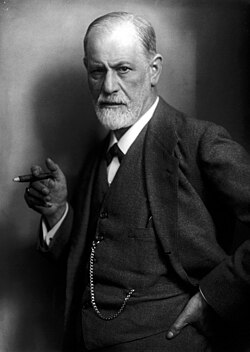
Sigmund Freud
1856–1939
A short biography
Freud, a physician who worked in Vienna, played a central role in the development of psychoanalysis. His writings on dreams, unconscious processes and inner conflict influenced psychology and cultural history.
Moving from medicine and neurology towards personal histories, he developed ideas through clinical conversations and case studies. Political persecution in Europe led him to spend the final part of his life in London.
What does this figure represent in psychology?
He foregrounds questions about processes that may not be immediately apparent to a person. On the homepage he represents unconscious processes and the search for meaning.
Psychoanalysis examined unconscious conflict, defence and transference, influencing culture as well as clinical thinking. A compelling case interpretation is not the same type of evidence as a controlled study. Keeping that distinction helps assess both his influence and the limits of particular claims.
Key concepts
Transference: examining past relationship patterns within the therapeutic relationship. Defence: a theoretical account of managing difficult inner experiences.
A question for the reader
In a case account, distinguish observation from interpretation. Could another theory explain the same observation differently?
Selected works and publications
- Die Traumdeutung · The Interpretation of Dreams1900-dated edition
- Das Unbehagen in der Kultur · Civilization and Its Discontents1930
Links lead to original texts, institutional catalogues or publication records; not every link provides a free full text. Work titles are retained in their original or established language.
Reading in context
Historical influence does not mean that all his theories have current empirical support. No universal dream-symbol dictionary is offered.
Sources
- Freud Museum London · The Interpretation of Dreams
- Freud Museum London · Civilization and Its Discontents
Source check: 16 October 2026. Institutional biographies and accessible bibliographic records were consulted; some records were checked through indexed summaries. Complete works were not all read. Concept connections and questions were written for this collection.