Memory and learning
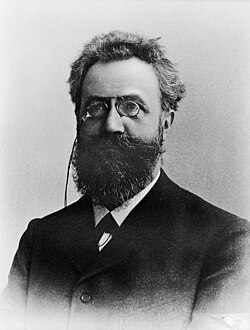
Hermann Ebbinghaus
1850–1909
A short biography
The German psychologist turned learning and relearning into measurable tasks. His systematic self-experiments used nonsense syllables. His 1885 book is an early example of quantitative memory research.
What does this figure represent in psychology?
The forgetting curve concerns change in retention over time. Savings compares effort in initial learning and relearning. A curve from one person and a particular material should not become a universal list of percentages; meaning, prior knowledge and task type also matter.
Key concepts
Savings: reduced effort in relearning compared with original learning. Retention interval: time between learning and measurement.
A question for the reader
Why is understanding lecture notes different from learning nonsense syllables?
Selected works and publications
Links lead to original texts, institutional catalogues or publication records; not every link provides a free full text. Work titles are retained in their original or established language.
Reading in context
Historical influence does not establish every claim today. Read original works in their historical and methodological context.
Sources
Source check: 16 October 2026. Institutional biographies and accessible bibliographic records were consulted; some records were checked through indexed summaries. Complete works were not all read. Concept connections and questions were written for this collection.