Functionalism
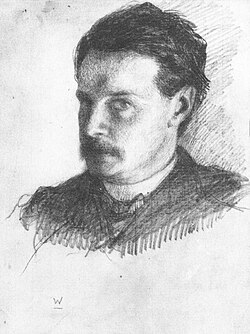
William James
1842–1910
A short biography
The US philosopher and psychologist James worked at Harvard and contributed to psychology’s academic development. He studied sensation, perception, emotion and consciousness.
Although trained in medicine, his academic work centred on psychology and philosophy. Teaching at Harvard and his broad psychology text helped introduce the emerging discipline to different readers.
What does this figure represent in psychology?
He represents attention to the functions of mental processes in life and adaptation. His work helped bring mind and body into the same discussion.
The stream of consciousness describes continuity in experience. Attention and habit concern the mind’s relations with its surroundings. His discussion of emotion and bodily change is a historical contribution to an ongoing question, rather than a complete contemporary model.
Key concepts
Stream of consciousness: continuity of experience. Function: the role of a mental process in living and adapting.
A question for the reader
How does describing the contents of attention differ from asking what attention does?
Selected works and publications
Links lead to original texts, institutional catalogues or publication records; not every link provides a free full text. Work titles are retained in their original or established language.
Reading in context
Historical functionalism is not identical to every contemporary cognitive or emotion theory.
Sources
Source check: 16 October 2026. Institutional biographies and accessible bibliographic records were consulted; some records were checked through indexed summaries. Complete works were not all read. Concept connections and questions were written for this collection.