Evolution and emotion
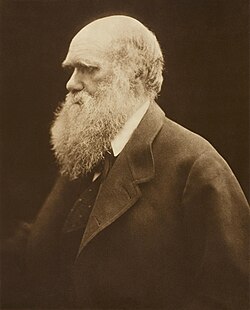
Charles Darwin
1809–1882
A short biography
The English naturalist explained biological change through common descent and natural selection. He used observation, correspondence and photographs to investigate emotional expression, publishing a comparative book in 1872.
What does this figure represent in psychology?
His work connects emotion and behaviour with the history of living organisms. Cross-species comparison asks how to explain both similarities and differences. An expression alone does not establish all of its meanings within a culture. Early observations can be compared with contemporary research methods.
Key concepts
Natural selection: heritable variation associated with differential reproductive success. Comparative approach: examining similarities and differences across species.
A question for the reader
How does observing an expression differ from knowing a person’s emotion?
Selected works and publications
Links lead to original texts, institutional catalogues or publication records; not every link provides a free full text. Work titles are retained in their original or established language.
Reading in context
Historical influence does not establish every claim today. Read original works in their historical and methodological context.
Sources
Source check: 16 October 2026. Institutional biographies and accessible bibliographic records were consulted; some records were checked through indexed summaries. Complete works were not all read. Concept connections and questions were written for this collection.