Learning and behaviour · Homepage figure
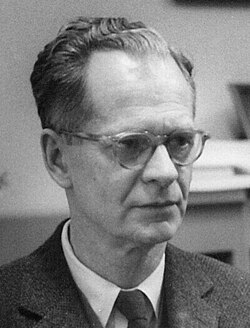
B. F. Skinner
1904–1990
A short biography
The US psychologist Skinner experimentally studied behaviour in relation to its consequences. His work contributed to operant conditioning and the development of behaviour analysis.
Using experimental arrangements, he studied changes in behaviour in relation to environmental consequences. Tracking patterns over time was central to this approach; he also wrote about education and society.
What does this figure represent in psychology?
He represents asking under what conditions behaviour continues and how it relates to its consequences. The homepage connects this with the possibility of changing learned patterns.
Operant conditioning examines behaviour and its consequences. Reinforcement is defined by its effect on future behaviour, not simply by whether something seems pleasant. Negative reinforcement differs from punishment: removing an aversive condition may increase behaviour.
Key concepts
Reinforcement: a process defined by increased future behaviour. Reinforcement schedule: the pattern in which consequences occur.
A question for the reader
What learning question arises when postponing a task brings immediate relief? Does that example explain the whole person?
Selected works and publications
Links lead to original texts, institutional catalogues or publication records; not every link provides a free full text. Work titles are retained in their original or established language.
Reading in context
Behaviour analysis is not simply handing out rewards; one experiment cannot directly explain all of human life.
Sources
Source check: 16 October 2026. Institutional biographies and accessible bibliographic records were consulted; some records were checked through indexed summaries. Complete works were not all read. Concept connections and questions were written for this collection.