Philosophical roots
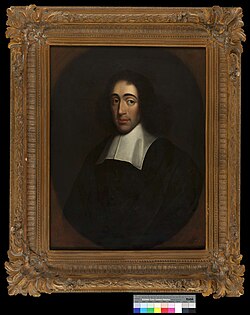
Baruch Spinoza
1632–1677
A short biography
Born in Amsterdam, Spinoza developed a systematic philosophy treating human beings as part of nature. He pursued independent philosophical study and writing in the early modern period. His posthumously published Ethics connects emotion with knowledge and freedom.
What does this figure represent in psychology?
He sought to understand emotions through their causes rather than as defects outside nature. Conatus concerns striving to persist. Treating mind and body as aspects of one reality invites comparison with Descartes. This is a philosophical framework rather than a contemporary psychotherapy method.
Key concepts
Conatus: striving to persist. Activity and passivity: relating affects to understanding and capacity to act.
A question for the reader
Is explaining an emotion the same as approving it?
Selected works and publications
- Ethica · Ethics1677
Links lead to original texts, institutional catalogues or publication records; not every link provides a free full text. Work titles are retained in their original or established language.
Reading in context
Historical influence does not establish every claim today. Read original works in their historical and methodological context.
Sources
Source check: 16 October 2026. Institutional biographies and accessible bibliographic records were consulted; some records were checked through indexed summaries. Complete works were not all read. Concept connections and questions were written for this collection.