Humanistic psychology
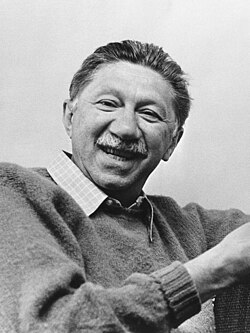
Abraham Maslow
1908–1970
A short biography
The US psychologist studied motivation and human potential. His work at Brandeis helped establish humanistic psychology alongside behaviourism and psychoanalysis, asking about creative and meaningful living as well as difficulties.
What does this figure represent in psychology?
Priorities among needs and self-actualisation are familiar concepts. The popular pyramid should not be read as a law requiring everyone to follow an identical sequence. Needs can coexist, and material and cultural conditions matter. Comparing Maslow with Rogers shows different emphases within humanistic psychology.
Key concepts
Need: a concept for understanding motivation. Self-actualisation: a theoretical ideal concerning development of personal possibilities.
A question for the reader
Can a student experience security, belonging and learning needs at the same time? What does that imply for a simple pyramid interpretation?
Selected works and publications
Links lead to original texts, institutional catalogues or publication records; not every link provides a free full text. Work titles are retained in their original or established language.
Reading in context
Historical influence does not establish every claim today. Read original works in their historical and methodological context.
Sources
Source check: 16 October 2026. Institutional biographies and accessible bibliographic records were consulted; some records were checked through indexed summaries. Complete works were not all read. Concept connections and questions were written for this collection.